
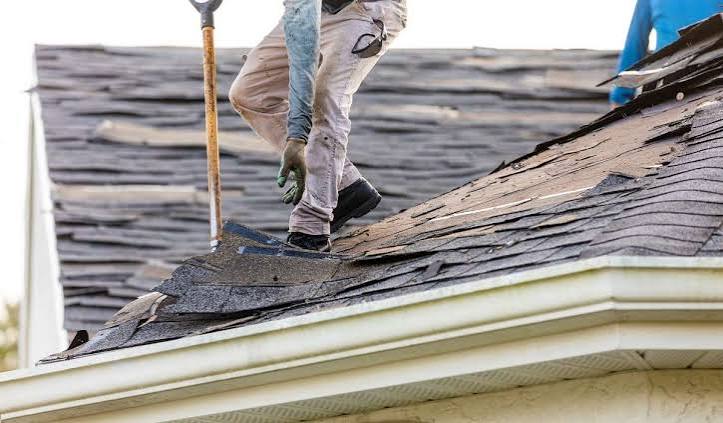
Storm Damage Roof Replacement: What It Costs, What Insurance Pays, and What Determines the Difference
Most homeowners deal with a storm-damaged roof once or twice in their lives. The roof takes a hit from hail or high winds, the damage is visible, and a contractor tells them they need a full replacement. What follows is a process most people have never navigated: an insurance claim, an adjuster visit, a scope of loss document, and a final cost that doesn’t always match what they expected.
This article explains how storm damage roof replacement costs are calculated, what insurance covers and what it doesn’t, and what factors determine how much a homeowner actually pays when the job is done.
How Hail and Wind Damage a Roof at the Structural Level
To understand why storm damage often triggers a full replacement rather than a patch, it helps to understand what hailstones and wind actually do to a shingle roof.
What hail does to shingles
Hailstones strike the shingle surface and bruise the mat beneath the granule layer. The granules on an asphalt shingle protect the underlying fiberglass substrate from UV degradation and water penetration. When a hailstorm strips or displaces those granules, the substrate is exposed.
A single impact may not compromise the roof’s ability to shed water immediately. But concentrated impacts across multiple slopes, combined with granule displacement across a large field area, weaken the shingle system as a whole. A licensed inspector looks for bruising patterns (soft depressions in the mat beneath the surface), bare fiberglass substrate, and impact density across the roof field to determine whether the damage is localized or systemic.
When hail damage is systemic, repair is not a practical solution. Replacing individual sections of a shingle field leaves mismatched materials, inconsistent granule coverage, and no warranty continuity across the patched areas.
What wind does to a roof
High winds damage a roof differently. Wind uplift gets beneath shingle tabs that are already weakened by age, improper installation, or prior impact and pulls them away from the deck. Wind also separates ridge caps, pulls flashing away from walls and penetrations, and in severe cases lifts sections of the shingle field entirely.
Wind damage is often visible from the ground: missing shingles, lifted tab edges, or exposed deck sections. But wind damage also includes less visible failures. Flashing that has separated from a wall or chimney base allows water to enter along the roofline without producing an obvious surface gap. A contractor who inspects only the shingle field and misses the flashing is producing an incomplete damage assessment.
When Does Storm Damage Require a Full Replacement?
The answer depends on three factors: the age of the roof, the extent of the damage, and the material type.
Roof age and remaining service life
A shingle roof has a finite service life determined by its material class. A standard three-tab asphalt shingle system carries a shorter service life than a dimensional or architectural shingle system. When a storm damages a roof that is near the end of its service life, repair is rarely the right answer. The surrounding shingles have already degraded to a point where the repaired sections will fail prematurely relative to a full replacement.
Insurance adjusters and contractors both consider remaining useful life when assessing damage. A roof with significant years of service life remaining is treated differently than a roof that was already due for replacement.
Extent and density of damage
A small section of localized hail damage on a slope that is otherwise in good condition may support a repair. Damage that spans multiple slopes, covers a high percentage of the shingle field, or includes both the shingle layer and the flashing system almost always justifies full replacement.
The industry standard used by most insurance carriers is based on the number of impacts per 10-square-foot test square. Adjusters count hits within a defined area across each slope. When the hit count reaches the carrier’s threshold for that shingle type, the slope qualifies for replacement.
Material type and availability
Some shingle products are no longer manufactured in their original specification. When a contractor cannot source matching material for a repair, the carrier typically approves full replacement rather than a visible patch using non-matching shingles.
How the Insurance Claim Process Works
Filing a storm damage insurance claim involves several steps, and what happens at each step affects the final payout.
Step 1: The contractor inspects first
Before contacting the insurance carrier, a homeowner benefits from having a licensed roofing contractor inspect the roof and produce a written damage assessment. This document becomes the baseline for the claim.
A contractor who walks the roof, photographs each area of impact, and documents damage to the shingles, flashing, gutters, and any penetrations gives the adjuster a complete picture of what the storm produced. A homeowner who contacts the carrier without that documentation may receive a scope of loss that misses damage the adjuster didn’t identify.
Step 2: The adjuster inspects and produces a scope of loss
The insurance carrier sends an adjuster to inspect the property. The adjuster produces a scope of loss: a line-item document that identifies the damaged components, the quantities involved, and the unit costs the carrier will pay to repair or replace them.
The scope of loss is the carrier’s offer, not a final settlement. It can be supplemented.
Step 3: The contractor reviews the scope of loss
A contractor experienced with insurance claims reads the scope of loss and compares it against their own inspection findings. Line items that the adjuster missed, materials that were underpriced relative to current market rates, and labor allowances that don’t reflect the actual scope of work are all grounds for a supplement.
The supplement process: the contractor prepares a written supplement with supporting documentation (photos, measurements, current pricing) and submits it to the carrier. The carrier reviews and either approves, partially approves, or denies the supplement. Approved supplements increase the total claim payout.
Step 4: The carrier issues payment
Once the scope is agreed upon, the carrier issues payment according to the policy terms. This is where the policy type becomes the most important variable in the homeowner’s out-of-pocket cost.
What the Insurance Policy Actually Pays: RCV vs. ACV
The two most common policy types for residential property are Replacement Cost Value (RCV) and Actual Cash Value (ACV). The distinction determines how much of the replacement cost the carrier covers.
Replacement Cost Value (RCV)
An RCV policy pays to replace the damaged roof with materials of like kind and quality at current market prices, without deducting for the roof’s age or depreciation.
Payment under an RCV policy comes in two stages. The carrier issues an initial payment equal to the ACV (the replacement cost minus depreciation). The homeowner completes the replacement, and the contractor submits proof of completion. The carrier then releases the recoverable depreciation, bringing the total payment up to the full replacement cost minus the deductible.
The homeowner’s out-of-pocket cost under a properly filed RCV claim is the deductible.
Actual Cash Value (ACV)
An ACV policy pays the replacement cost of the damaged materials minus depreciation based on their age and condition at the time of the storm. The carrier does not release additional payment after the work is complete.
For a roof with significant remaining service life, the ACV payout may still cover a large portion of the replacement cost. For an older roof, the depreciation deduction can be substantial, leaving the homeowner responsible for a larger share of the total cost.
Why the policy type matters before a storm
Homeowners who have ACV policies are sometimes surprised by the depreciation deduction after a major claim. Reviewing the current policy and understanding whether it covers full replacement cost is a step worth taking before storm season rather than after a loss.
What Homeowners Actually Pay Out of Pocket
Under a standard RCV policy, the homeowner’s direct cost is the deductible. Deductibles for wind and hail claims vary by policy. Some policies carry a flat dollar deductible; others carry a percentage deductible calculated against the insured value of the home. A percentage deductible on a high-value home can represent a significant amount.
Beyond the deductible, a few situations increase out-of-pocket costs:
Upgrades and code requirements
If local building codes require upgraded materials or methods that weren’t part of the original roof (additional underlayment, specific ventilation requirements, code-compliant flashing at penetrations), the carrier may cover the base cost of the original specification and leave the upgrade cost to the homeowner. Some policies include ordinance and law coverage that pays for code-required upgrades; others don’t.
Non-covered components
Not all roof-adjacent components are included in a standard roofing claim. Skylights, solar panels, roof-mounted HVAC equipment, and certain types of gutters may require separate coverage or separate claims under different policy sections.
Material upgrades the homeowner chooses
If a homeowner decides to replace a damaged three-tab shingle roof with a dimensional shingle or metal roofing system, the carrier pays for a like-kind replacement. The cost difference between the covered material and the upgraded material is the homeowner’s responsibility.
What Actually Determines the Final Cost of a Storm Damage Roof Replacement
Setting aside the insurance variable, the base cost of a storm damage roof replacement is determined by four factors.
Roof size and pitch
Roofing costs are calculated per square (100 square feet of roof surface). A larger roof covers more squares. A steeper pitch requires additional labor time, safety equipment, and material handling. Low-slope and flat sections may require different material systems than steep-slope sections on the same roof.
Material selection
Asphalt shingles are the most common replacement material and carry the widest cost range depending on shingle class (three-tab, dimensional, impact-resistant). Metal roofing, synthetic slate, and tile carry higher material costs but longer service life. The material selection affects both the installation cost and the long-term performance of the replacement.
Decking condition
When the shingle system is removed, the contractor inspects the decking beneath. Rotted or damaged sections of decking must be replaced before the new shingles are installed. The extent of decking damage is not always known before tear-off and can affect the final cost of the project.
Disposal and local labor market
Tear-off and disposal of the old shingle system adds to the project cost. Local labor market rates vary by region and affect the total installation cost regardless of material selection.
What to Ask a Contractor Before Signing Anything
Before a homeowner signs a contract for a storm damage roof replacement, these are the questions worth asking:
- Are you licensed and insured in this state, and can you provide documentation?
- Will you walk the roof with me and explain what you found before we contact the carrier?
- Do you handle the supplement process if the adjuster’s scope misses damage?
- What materials are included in your estimate, and do they match the carrier’s approved scope?
- What is the warranty on materials and workmanship, and who backs the workmanship warranty?
- Are there any components that may need replacement once tear-off begins, and how will you communicate that before proceeding?
A contractor who answers these questions directly and in writing is positioned to manage the claim process professionally. One who deflects or pressures a quick signature without addressing the insurance process is a risk on a storm claim.
Conclusion
When a storm damages a roof, the homeowner’s outcome is shaped by three things: the condition of the damage, the terms of the insurance policy, and the contractor who manages the inspection, the documentation, and the installation. All three variables are knowable before signing anything. The homeowners who get the best outcomes on storm damage roof replacement claims are the ones who understand the process before the adjuster arrives.
Apple Roofing serves Blue Springs, Kansas City, and the surrounding KC-metro communities. The company inspects storm-damaged roofs, documents conditions for the insurance carrier, files alongside the adjuster, and installs replacements for hail, wind, and storm-impacted roofs across Jackson County and the broader metro area.
View Your Reliable Roofing Experts in Blue Springs in a full screen map
Media Contact:
Company Name: Apple Roofing
Phone: 816-290-7392
Address: 2209 U.S. Hwy 40
City: Blue Springs
State: MO
ZIP Code: 64015
Country: United States
Website: https://appleroof.com/blue-springs-mo/
Social Media:
https://www.facebook.com/appleroofing
https://www.linkedin.com/company/apple-roofing-llc/
https://www.youtube.com/channel/UCMNRXjzM6GKfNh7hX8rRRfQ
https://www.instagram.com/appleroofing/