
How Can Five Drivers All Be Responsible for the Same Accident?
Picture a crowded freeway at rush hour. Someone taps their brakes, someone else is scrolling through a playlist, a third driver is riding too close, and a fourth swerves to avoid it all. Seconds later, five cars are tangled together across two lanes.
When the dust settles, everyone points somewhere else. The driver in back blames the person who braked. The person who braked blames the swerving car. It’s easy to assume only one person could be the real cause. Often, that’s just not true.
Chain-reaction crashes tend to grow out of several separate mistakes stacking on top of each other. Sorting out who did what takes far more than noticing which car got hit first, and the answer can be messier than anyone involved expects. Responsibility can spread widely.
Why Fault Isn’t Always an All-or-Nothing Question
In some states, fault works like a switch. Either you’re responsible or you’re not. California takes a more flexible approach called pure comparative fault, where responsibility can be split among everyone whose carelessness played a role. It’s a far more nuanced system.
That’s the foundation of multi-vehicle collision liability in California. Each driver can be assigned a percentage of fault, and an injured person’s recovery is reduced by their own share. Even someone mostly at fault may still recover something from others. That surprises many people.
How the damages get paid is another layer. Under California law, defendants are generally responsible for their own share of non-economic damages like pain and suffering, while economic damages like medical bills can sometimes be collected from any responsible defendant. It’s complicated, but important.
The Strange Physics of a Highway Chain Reaction
Every moving car carries momentum, and stopping it takes distance. When one driver brakes hard, the car behind needs time to notice, react, and slow down. At freeway speeds, even a second of hesitation covers a lot of ground. Those seconds matter enormously.
Tight following distances leave almost no room for error. If one car can’t stop in time, it rear-ends the next, sometimes shoving that vehicle into another car ahead. A single impact can turn into two, three, or more within moments. The dominoes start falling.
Lane changes and swerving add chaos. A driver trying to dodge the crash may veer into an adjacent lane and collide with someone else, creating a second chain reaction. That’s how a minor slowdown can explode into a multi-car pileup. Chaos multiplies quickly.
Why the First Driver to Crash Isn’t Necessarily the Only One at Fault
It’s tempting to blame whoever hit first. But the first impact might have been triggered by someone else. A driver who cut sharply across lanes could force others to brake hard, then drive away untouched while the crash unfolds behind them.
Distracted driving often plays a role. Someone texting at the back of the line might plow into stopped traffic at full speed, creating the most violent impact of all. They hit last, but they may have caused the most serious harm. Order isn’t everything.
Speeding and tailgating can also spread responsibility around. If several drivers were following too closely, each may share blame for failing to stop in time. California’s basic speed law also requires driving at a speed that’s safe for conditions, not just under the posted limit.
How Investigators Divide Responsibility
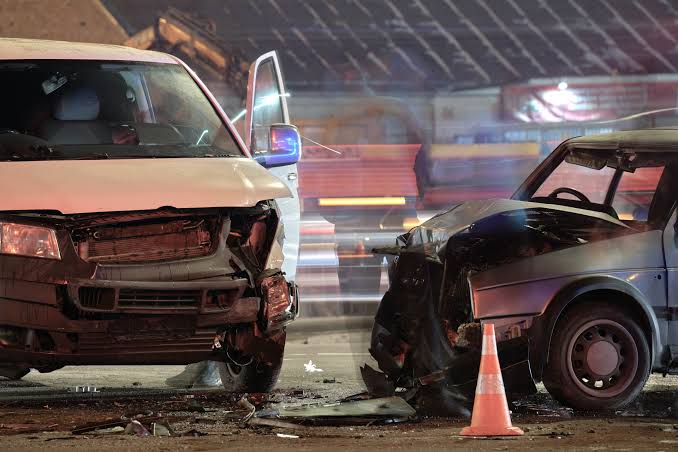
Vehicle damage is a big clue. The location and depth of dents can show which cars struck which, and in what order. Experts can sometimes tell whether a vehicle was hit once or multiple times from different directions. Bent metal tells a story.
Electronic data helps too. Many modern vehicles record speed, braking, and steering inputs in the seconds before a crash. Dashcams, traffic cameras, and nearby surveillance video can reveal lane changes and reaction times that drivers might misremember. Data rarely lies about speed.
Witness statements fill in gaps, though they don’t always agree. Reconstruction experts often combine all of this evidence, along with skid marks, debris patterns, and final resting positions, to build a timeline that shows how each driver’s actions contributed to the crash. It’s painstaking work.
Conclusion
Multi-car crashes rarely have a single, simple cause. Several drivers can each contribute through speeding, distraction, tailgating, or risky lane changes, turning a small mistake into a dangerous chain reaction. Most pileups are a group effort, unfortunately, built from several bad decisions made only seconds apart.
California’s comparative fault rules allow responsibility to be divided among everyone who played a part. That means every driver’s conduct deserves a careful, close look, not just the one whose bumper made the first contact. Fairness requires taking that wider view.
Careful investigation is what makes fair outcomes possible. Vehicle damage, electronic data, video, and witness accounts all help reveal the real sequence of events. When five drivers are involved, assuming one person caused everything rarely tells the whole story. Every driver deserves scrutiny.